
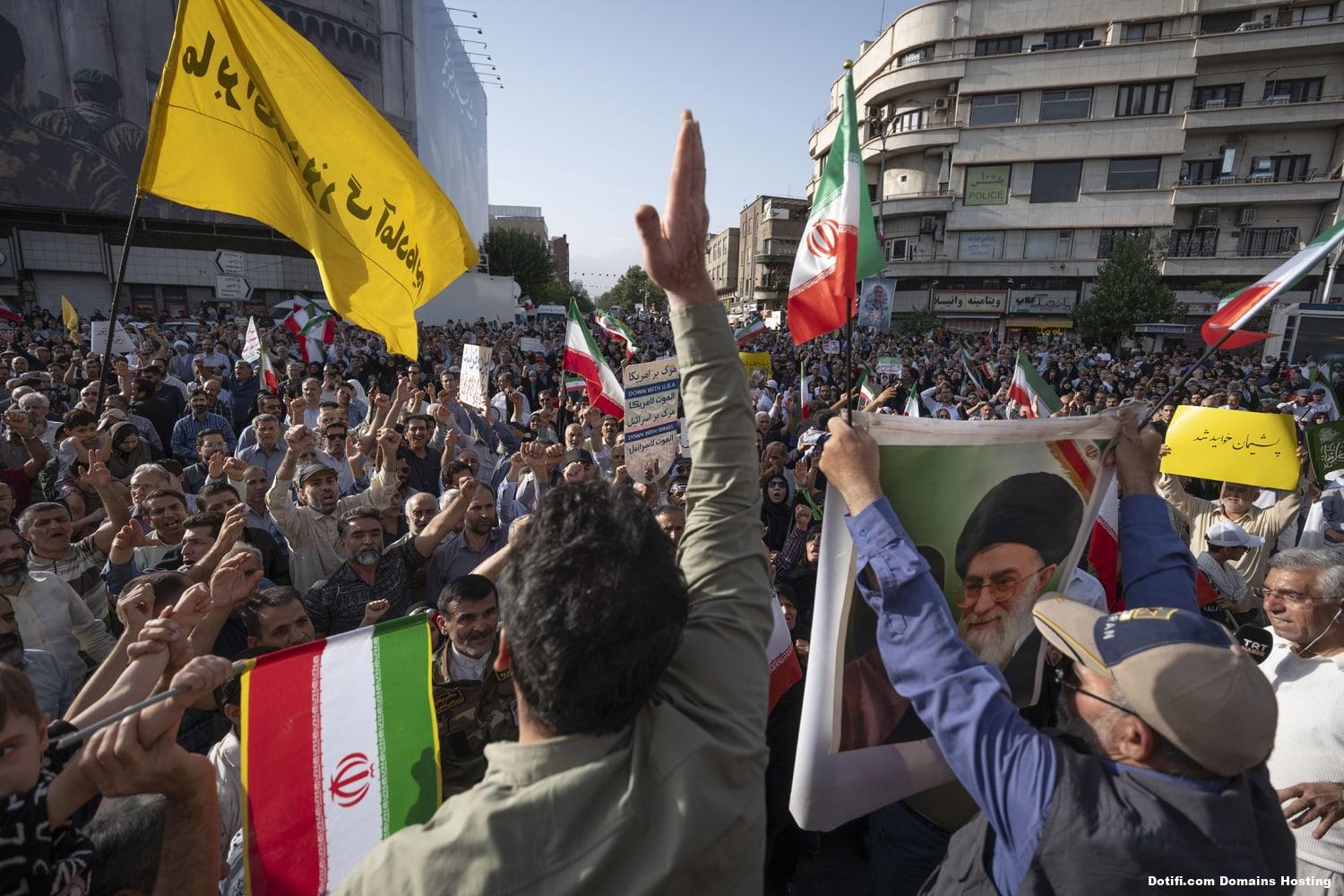
Iranian President Masoud Pezeshkian has called on his government to listen to protesters’ “legitimate demands” and pledged to protect their livelihoods following two days of demonstrations in Tehran against the plummeting national currency and dire economic conditions.
In comments on social media that were also reported by the government’s IRNA news agency on Tuesday, Pezeshkian acknowledged the concerns of the protesters, who have closed their shops and chanted in the streets in demonstrations in the capital since Sunday.
Iran has issued a stark warning to the United States, vowing a “severe” and decisive response to any renewed military action, following fresh comments by U.S. President Donald Trump suggesting the possibility of new strikes against the Islamic Republic.
The warning comes amid rising tensions in the Middle East, where diplomatic relations remain fragile after months of conflict, sanctions, and military brinkmanship involving Iran, the United States, and Israel.
Iran’s Leadership Issues Direct Warning
Iranian President Masoud Pezeshkian addressed the situation publicly, stating that any act of aggression against Iran would be met with consequences that would leave the aggressor “regretful.” His comments, shared via official and social media channels, reflected a unified stance within Iran’s political and military establishment that the country would not tolerate renewed attacks on its territory, infrastructure, or strategic capabilities.
Iranian officials framed their warning as defensive rather than provocative, arguing that Tehran has repeatedly demonstrated restraint while being subjected to what it describes as threats, sanctions, and military pressure from Washington and its allies.
Senior figures within Iran’s Revolutionary Guard Corps (IRGC) echoed this message, emphasizing that Iran possesses both conventional and asymmetric capabilities to respond across multiple fronts if attacked.
Trump’s Statements Raise Alarm
President Trump’s remarks followed a high-profile meeting with Israeli Prime Minister Benjamin Netanyahu at Trump’s Mar-a-Lago residence in Florida. During comments to reporters, Trump suggested that the United States would not hesitate to take military action if Iran attempted to revive its nuclear programme or expand its missile capabilities.
Trump stated that any effort by Iran to rebuild facilities or develop weapons systems previously targeted would be swiftly “knocked down.” His comments were widely interpreted as a signal that Washington is prepared to resume direct military pressure on Iran if it believes Tehran is crossing strategic red lines.
The remarks represent a continuation of Trump’s long-standing hardline posture toward Iran, which has included withdrawal from the 2015 nuclear deal, the reimposition of sweeping sanctions, and support for Israeli security actions in the region.
Iran Rejects Nuclear Weapons Claims
Iran has consistently denied allegations that it is seeking to develop nuclear weapons. Officials insist the country’s nuclear activities are strictly for civilian and energy purposes, a position Tehran says was supported by international inspections prior to earlier escalations.
Iranian leaders argue that neither U.S. intelligence agencies nor the International Atomic Energy Agency (IAEA) had conclusively determined that Iran was pursuing a nuclear bomb before hostilities resumed in previous years. Tehran claims accusations to the contrary are politically motivated and used to justify pressure campaigns.
Iran has also firmly rejected negotiations over its missile programme, stating that its ballistic and defensive missile systems are non-negotiable and essential to national security, particularly given the presence of U.S. forces and rival militaries across the region.
Regional Tensions and the Shadow of War
The exchange of threats comes against the backdrop of lingering instability following a brief but intense conflict earlier in 2025 involving Iran, the United States, and Israel. That confrontation, which lasted nearly two weeks, resulted in significant casualties, damage to infrastructure, and fears of a wider regional war.
Although open hostilities subsided, the underlying disputes remain unresolved. Analysts warn that rhetoric from leaders on all sides increases the risk of miscalculation, particularly in a region where proxy forces, militias, and allied armed groups operate across borders.
Iran has warned that any attack would not be limited to a single battlefield and could trigger responses affecting U.S. interests, allies, and shipping routes throughout the Middle East.
International Reaction and Diplomatic Concerns
International observers and diplomatic actors have expressed concern that escalating language could undermine already-strained efforts to stabilize the region. Calls for restraint have come from several global powers, warning that renewed military action could spark a broader confrontation with global economic and security consequences.
Despite these concerns, neither Washington nor Tehran has indicated a willingness to de-escalate publicly. Instead, both sides continue to emphasize deterrence, signaling strength to domestic audiences while positioning themselves strategically on the international stage.
A Volatile Standoff
As of now, no immediate military action has been announced. However, the exchange of warnings highlights how quickly tensions could spiral. With trust between the two countries at historic lows and communication channels limited, even symbolic actions or statements carry significant weight.
The situation remains fluid, with regional stability hinging on decisions made in Washington, Tehran, and allied capitals in the coming weeks.
References (Links at Bottom)
-
Al Jazeera – Iran warns of ‘severe’ response in wake of Trump’s new strikes threat (30 December 2025)
https://www.aljazeera.com/news/2025/12/30/iran-warns-of-severe-response-in-wake-of-trumps-new-strikes-threat
Facebook Comments