
Our fingers are incredibly versatile and essential parts of our bodies. They are primarily used for grasping, manipulating objects, and
performing intricate tasks. Here are some interesting facts about our fingers: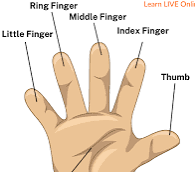
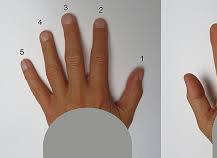
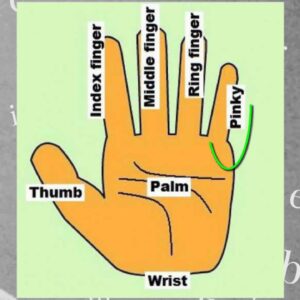
- Structure: Each hand typically has five fingers, including the thumb, index finger, middle finger, ring finger, and little finger (also known as the pinky). These digits are composed of bones, muscles, tendons, ligaments, nerves, and blood vessels.
- Thumb: The thumb is opposable, meaning it can move in a way that allows it to touch the other fingers of the same hand. This opposable thumb is crucial for activities such as gripping objects and performing fine motor tasks.
- Sense of Touch: Our fingers contain numerous sensory receptors that allow us to feel textures, temperatures, pressure, and pain. This sense of touch is vital for our interactions with the world around us.
- Dexterity: The fingers are incredibly dexterous, enabling us to perform a wide range of tasks with precision, such as typing, playing musical instruments, and crafting.
- Fingerprints: Each person has a unique pattern of ridges and valleys on their fingertips, known as fingerprints. These patterns are formed during fetal development and remain unchanged throughout a person’s life. Fingerprints are often used for identification purposes.
- Health Indicators: The condition of our fingers can sometimes indicate underlying health issues. Changes in nail color, texture, or shape, as well as swelling or stiffness in the fingers, may be signs of various medical conditions.
Overall, our fingers play a crucial role in our daily lives, facilitating our interactions with the physical world and enabling us to perform a wide range of tasks with precision and skill.
Anatomy of the Hand
The hand is composed of many different bones, muscles, and ligaments that allow for a large amount of movement and dexterity. There are 3 major types of bones in the hand itself, including:

Phalanges. The 14 bones that are found in the fingers of each hand and also in the toes of each foot. Each finger has 3 phalanges (the distal, middle, and proximal); the thumb only has 2.
Metacarpal bones. The 5 bones that compose the middle part of the hand.
Carpal bones. The 8 bones that create the wrist. The 2 rows of carpal bones are connected to 2 bones of the arm–the ulna bone and the radius bone.
Numerous muscles, ligaments, tendons, and sheaths can be found within the hand. The muscles are the structures that can contract, allowing movement of the bones in the hand. The ligaments are fibrous tissues that help bind together the joints in the hand. The sheaths are tubular structures that surround part of the fingers. The tendons connect muscles in the arm or hand to the bone to allow movement.
In addition, there are arteries, veins and nerves within the hand that provide blood flow and sensation to the hand and fingers.