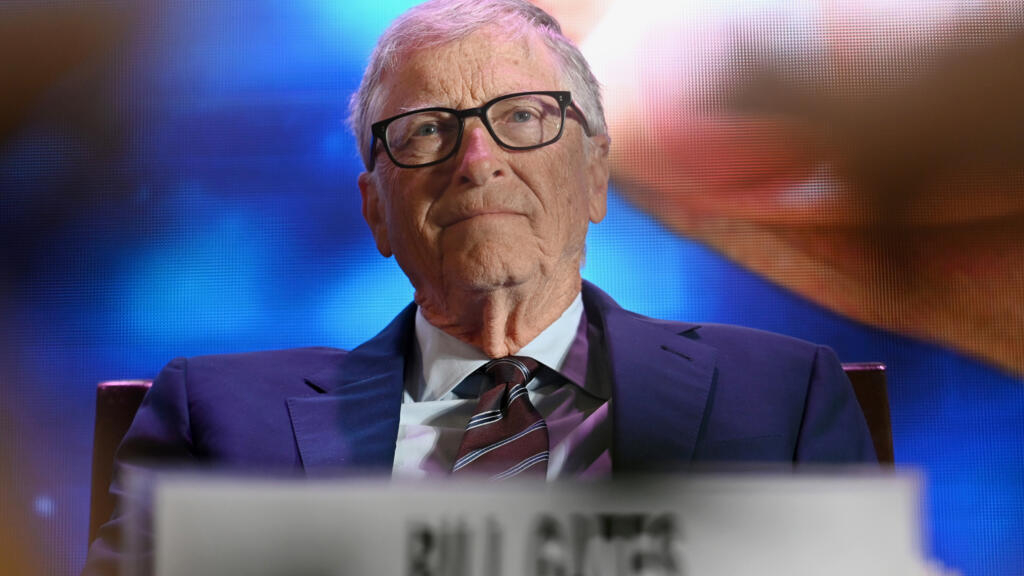
In a sweeping and sobering 6,000-word essay published on August 26, 2026, Microsoft co-founder and philanthropist Bill Gates declared that the world is “dangerously unprepared” for the upheaval brought by artificial intelligence . The shift into the AI era, he warned, will rank among “one of the most turbulent times in human history” .
“AI will either be the greatest equalizer ever invented, or the worst source of injustice,” Gates wrote . Which course it takes, he stressed, depends on actions being taken right now .
“There Is No Plan”
Gates, 70, who now chairs the philanthropic foundation bearing his name, expressed deep frustration with the global response—or lack thereof—to the unfolding AI revolution .
“There is no plan to ease the entry into the AI era,” he stated bluntly, adding that he would likely support one if it existed . “I don’t see evidence that leaders, experts, and communities are confronting the challenges adequately” .
He acknowledged that the geopolitical and economic incentives driving AI development are too powerful to stop. “If someone had a credible plan for slowing down AI advances globally, I would likely support it. However, I don’t think that’s going to happen” .
Three Major Risks
Gates identified three principal dangers arising from the rapid deployment of AI :
1. Permanent Job Destruction
Unlike previous technological shifts, Gates argued, AI can substitute for thinking itself . Comparisons to the shift from farm work to office work are misleading, he said, as that transition unfolded over generations and created roles that still required human cognition .
He warned that AI will hit law, medicine, customer service, software, and manufacturing “over the course of a decade rather than a few generations” . Entry- and mid-level positions are the most exposed, leaving young people entering a workforce with far fewer openings .
Even blue-collar work will follow as robots become cheaper, with construction and hospitality feeling pressure by the end of the decade . “There will be some new jobs, but without the right policies there will be far fewer than exist today,” he warned .
In an interview, Gates admitted the technological advances had truly stunned him this year when he saw Anthropic’s Claude Code perform coding tasks. “The idea that now these things are in a meaningful sense better than I am is like: What the hell?” he said .
2. Empowering Bad Actors
Gates warned that AI hands dangerous new capabilities to criminals and hostile states . Cybersecurity experts he knows are “scared about the next few years” because attackers are gaining ground faster than defenders can patch weaknesses .
Hospitals, banks, water systems, and power grids are all exposed, he said . “Even criminals with very limited skills will be able to target victims at every scale: individuals, companies, and governments” .
More alarmingly, Gates said we have already crossed the “bioterrorism threshold.” AI models capable of making novel molecules should be monitored, he argued, proposing international cooperation with China on defining such thresholds .
“On the current course and speed, there’s a very high chance of a net negative outcome,” Gates told Axios .
3. Threatening Human Connection and Child Development
The third area of risk concerns children and human relationships . Gates warned that AI chatbots that never challenge or frustrate users risk becoming addictive and denying people the chance to build social skills .
“They rob us of the lessons we learn from connecting with other people,” he wrote . He cited research showing that AI could magnify risks already seen with social media—compulsive use, disrupted sleep, cyberbullying, and exposure to harmful content .
Young people could be “affected for their entire lives” if adults fail to draw the line .
“Human Reserved” Jobs and Robot Taxes
Gates proposed several unconventional solutions :
-
“Human Reserved” Jobs: He suggested that some jobs should be set aside for humans, even if AI can do them better and more cheaply—a domain he has started calling “Human Reserved” .
-
AI and Robot Taxes: He proposed taxing AI usage and robots, an idea he has floated for nearly a decade, to slow the rush away from human labor and raise money for retraining and a stronger safety net .
-
New National and International Institutions: Gates called for new institutions capable of coordinating AI policy across national security, employment, education, taxation, and health, alongside an international body with elements of nuclear inspections and aviation regulation .
Accusing the Tech Industry of Downplaying Risks
In an interview with The New York Times, Gates accused the tech industry of knowingly downplaying AI threats because “the next trillion dollars” is on the line .
“In private, people who understand how good this stuff is, and how much better it’s getting, they’re very worried,” he said . “They’re now saying to each other: ‘Hey, man, don’t say that. It’s bad for us—the next trillion dollars we’re trying to raise'” .
He contrasted his position with that of Meta CEO Mark Zuckerberg, who recently wrote that he does “not understand why anyone who believes that AI will eliminate most jobs and much of humanity’s relevance would rush to build that future” .
A Flawed Messenger?
Gates acknowledged that he might be a flawed messenger given his vast wealth and history as Microsoft’s aggressive chief executive during the company’s landmark antitrust case .
“People understand what I did do, what I didn’t do and that I learn when I make mistakes,” he said after testifying before a House committee earlier in 2026 .
He conceded: “I’ve never seen a problem that innovation can’t solve. I’m surprised to feel this way,” referring to his newfound desire for AI to advance more slowly .
Conclusion: A Call to Act Now
Despite his dire warnings, Gates insisted AI still holds enormous potential to improve lives—from helping doctors and teachers to combating climate change and eradicating diseases .
“Can we have a small amount of the bad with the large amounts of the good? That’s the name of the game,” he asked .
“My message to leaders is: You have a chance to act now, before unemployment rises sharply, communities are hurting, and public trust has eroded,” he wrote . “You can make sure AI benefits everyone. And you can work with other governments to meet this national and global challenge” .
Whether the world will heed his call before the turbulent era fully arrives remains the defining question of our time.