
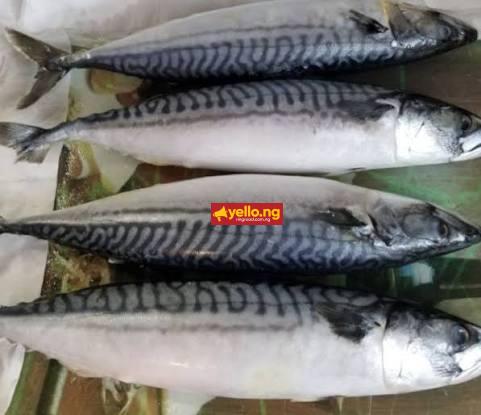
Mackerel, popularly known as Titus fish, earned its place as a luxury item for many households due to severe economic shifts, foreign exchange pressures, and heavy reliance on importation.
Sourcing and Journey to Nigeria
-
Where it is gotten: Atlantic mackerel are marine pelagic fish found primarily in the temperate and tropical waters of the Atlantic Ocean, the North Sea, and around European and North American coastal shelves.
-
How it reaches Nigeria: Mackerel is not native to Nigerian territorial waters in commercial quantities. Instead, it is imported frozen on a massive scale. Foreign commercial trawlers catch, clean, and flash-freeze the fish at sea before packing them into massive cargo ships. These containers are shipped across the Atlantic to Nigerian seaports (primarily in Lagos), where they are cleared, distributed to cold rooms (“cold rooms”), and hawked or sold in local neighborhood markets across the country.
-
Are they alive? Can they be bred in Nigeria? No, they are not imported alive; they arrive strictly frozen or smoked. Furthermore, they cannot be bred in Nigeria. Atlantic mackerel are saltwater pelagic fish that require vast, cold, deep marine environments with specific high salinity levels and migratory paths. They cannot survive, let alone reproduce, in standard Nigerian aquaculture setups, freshwater ponds, or local warm coastal waters.
Local Nigerian Fish Types, Slang Names, and Prices
Several alternative fish species are caught locally or imported affordably and are widely available in neighborhood markets across Nigeria:
High-End and Premium Fish Types Found in Nigerian Markets
While everyday markets stock standard options, high-end supermarkets, specialized coastal fish markets (such as Oyorokotor in Rivers State or high-end ports in Lagos), and upscale restaurants deal in much costlier, premium catches:
-
Blue Marlin (Agbadu / Deep Sea Marlin) – Found in deep offshore Atlantic waters (frequently landed at major delta and coastal fishing ports like Andoni in Rivers State); commands massive curiosity and high value as a rare deep-sea catch.
-
Whole Fresh Salmon – Imported chilled or frozen from cold northern seas; found in high-end supermarkets in Victoria Island, Ikoyi, and Abuja.
-
Salmon Fillets / C-Trim Portions – Premium cuts sold in high-end retail chains (e.g., Spar, Hubmart) for high-income households and fitness diets.
-
Jumbo Tiger Prawns / King Prawns – Massive crustaceans sourced from brackish creeks and deep coastal waters, heavily sought after for luxury event catering.
-
Red Croaker (Eja Awo / Skuu) – A prized scale fish with firm, white flesh, heavily demanded by upscale hotels and seaside open-air grill spots for barbecue.
-
Yellow Croaker – A variant of croaker favored in high-end continental and local restaurant dishes.
-
Calamari / Squid Rings – Imported frozen cephalopods stocked in specialized expatriate and luxury grocery stores.
-
Live Imported Turbot / Halibut – Occasionally found in specialized cold chains for high-end hospitality businesses.
-
Giant Sea Crabs and Crab Claws – Sourced from coastal mangrove belts and sold in specialized urban seafood markets.
-
Tuna Steaks – Deep-sea pelagic fish processed into thick steaks, found in premium urban supermarkets.
-
Pike / Specialized Imported White Fish Fillets – Packaged boneless fillets imported for specialized culinary markets.
-
Giant Barracuda (Eja Owo) – A fierce predatory marine fish caught off the Atlantic shelf, prized by coastal restaurants for its rich, firm meat.
- Hydrodynamic Body: A streamlined, fusiform shape with a deeply forked tail allows continuous, energy-efficient cruising across open oceanic currents.
- Oily Flesh Mechanics: High intramuscular lipid storage provides buoyancy and endurance for long-distance oceanic migration.
- Filter and particulate Feeding: A specialized gill raker and ram-feeding system capture small crustaceans, zooplankton, and small schooling fish.
- Nutritional Value: Highly prized for abundant omega-3 polyunsaturated fatty acids (EPA and DHA), vitamin B12, and high-grade protein. These nutrients support cardiovascular health, lower blood pressure, and aid neurological development.
- Market Substitutes & “Fake Titus”: Due to high costs, alternative species like the Chub mackerel (Scomber japonicus)—locally called Kampala—are sometimes substituted or sold alongside true Titus. While nutritionally similar, Kampala has a broader head, duller markings, and less oily flesh, leading to colloquial market perceptions of authenticity.
- Perishable Spoilage: Improper cold-chain maintenance during importation or market storage can lead to rapid lipid oxidation and bacterial breakdown, making reliable refrigeration critical.