By Chukwuma Okoli & Ndu Nwokolo
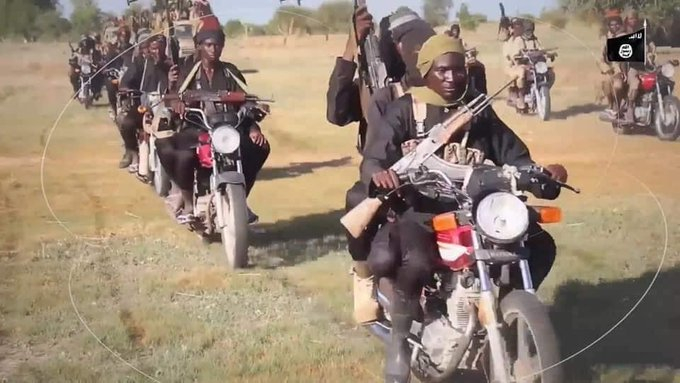
In recent years, the Benin Republic has come under intense pressure from violent Jihadist terror groups, particularly the Katiba Hanifa faction of the Jama’at Nusrat al Islam wa al Muslimeen (JNIM), which has continued to entrench itself in Benin. Analysts argue that Benin is a means to an end for JNIM. The group’s presence in Benin is designed to serve two key objectives. First, JNIM uses its activities in Benin to obtain logistical support for its operations in Burkina Faso through smuggling, kidnapping, and other illicit economic activities in Benin. Secondly, the group aims to diminish the Beninesemilitary capacity to attack JNIM bases in Burkina Faso. To actualize these objectives, JNIM attempts to establish a large buffer zone, along the tri-border area between Burkina Faso, Benin, and Togo, stretching from Monsey and Pendjari National Parks in Benin, up to the Mandouri villages in Togo. The buffer zone would enable JNIM to encircle Ouagadougou, mitigate counterinsurgency attacks from regional bodies, and provide a criminal economy from which JNIM would recruit fighters and also raise revenue to sustain its operations. The expansion of JNIM and its entrenchment in Benin is evidenced by the increased fatalities arising from terrorism in the country, withfatalities arising from terrorism reaching 575 deaths in 2025.
The expansion and entrenchment of Jihadist terror groups in Benin have serious security and economic implications for Nigeria. Benin is Nigeria’s strategic neighbour and long-timeeconomic and political ally. Nigeria’s international border with the Republic of Benin is about 700 km long. Nigeria is Benin’s largest trade partner with re-export activities, mostly to Nigeria, accounting for more than 40 percent of Benin’s imports. On the political front, in 1973, Benin refrained from joining the Communauté économique de l’Afrique de l’Ouest (C.E.A.O.), established by Francophone countries, because Nigeria was not a member. Benin is also cooperating with Nigeria under the Multinational Joint Task Force (MNJTF) established to combat terrorism in the Lake Chad region. Just recently, in 2025, Benin relied on Nigeria to thwart a military coup by soldiers who tried to overthrow President Patrice Talon. This edition of the Nextier SPD Policy Weekly foregrounds the security and economic implications of the increasing activities of Jihadist terror groups in the Benin Republic for Nigeria.
Enablers of Jihadist Expansion and Entrenchment in the Benin Republic
Since 2022, the Benin Republic has experienced an upsurge in the activities of Jihadist insurgents, particularly JNIM, which is expanding into the country as part of the group’s overarching strategy of expanding its geographical base and operations into the coastal states of West Africa. Kidnappings, mostly attributed to JNIM and similar Jihadist groups in Benin, rose from 6 in 2020 to 49 in 2023. Aside from pockets of kidnapping, Jihadist groups have inflicted high-impact attacks on the civilian population and military positions in Benin. In 2023, Benin experienced 58 fatalities arising from 82 attacks by JNIM. This increased in 2024 to 103 fatalities from 114 attacks, and by 2025, at least 575 fatalities were recorded from Jihadists’attacks in Benin. This trend signposts the increasing capacity of JNIM to orchestrate strategic lethal and high-impact attacks in Benin aimed at weakening the military and counterinsurgency capacity of Benin. For instance, in January 2025, an attack byJNIM on Point Triple killed at least 28 Beninese soldiers. In another coordinated attack, at least 54 Beninese soldiers were killed by JNIM when the group launched attacks on military positions along the Benin–Burkina Faso border in April 2025.
Various factors enable JNIM expansion into Benin, but threeare critical, especially as they concern the implications of Jihadist terrorism in Benin for Nigeria. First is the burgeoning informal economy in Benin. Benin has the 89th-highest share of the informal economy among 158 countries. The informal economy employs 95 percent of the workforce in Benin and accounts for about 60 percent of GDP. This burgeoning informal economy in Benin aligns well with JNIM’s operational strategies, which involve inserting themselves intoinformal economies to recruit members and raise revenue from criminal activities. In this regard, the Northern regions of Benin have been strategic for Jihadist groups by providing markets for stolen commodities, including livestock, artisanal gold, fuel, etc., and functioning as a transit zone.The second key enabler of Jihadist expansion into Benin is its proximity to Burkina Faso, Niger, and Nigeria, all of which are afflicted by Jihadist groups, but also have porous borders that the Jihadist groups exploit to transplant themselves across the Sahel and coastal states of West Africa, including Benin. The third factor that enables Jihadist expansion and entrenchment in Benin is the inability of regional bodies to address the challenges associated with transhumance across West Africa. The increase in climate change, resulting in the contestation over water and land resources between Fulani herders and sedentary farmers such as the Bariba and Dendi, has provided the interstices exploited by Jihadist insurgents to manipulate ethnic chauvinism, gain entry, and entrench themselves in communities in Northern Benin.
What does Jihadist Expansion and Entrenchment in the Benin Republic Mean for Nigeria?
The expansion and increasing activities of violent Jihadist terror groups in the Benin Republic accentuate security threats emanating from Nigeria’s western border, which it shares with the Benin Republic. Already, the terrorism and political instability in Chad and Niger have continued to feed the insecurity in the Northern parts of Nigeria. The worsening situation in Benin adds to Nigeria’s security dilemma in many ways. Nigeria’s over 700km international border with Benin traverses five states with major crossings at Seme-Krake in Lagos State, Idiroko in Ogun State, Aiyegun in Oyo State, Chikanda in Kwara State, and Babanna in Niger State. These borders are not just porous; they facilitate the informal movement of persons and goods between Nigeria and the Benin Republic. For instance, petrol (also called Kpayo in Benin) smuggled from Nigeria into Benin represents about 85 percent of fuel consumption in Benin. This means that established terror groups in Benin can easily obtain logistical supplies from Nigeria, form alliances with terror groups operating in Nigeria,and launch terror activities in Nigeria using the Benin Republic as a base or transit zone. Already, the increasing terrorist activities in parts of the states where Nigeria shares a direct border with Benin, such as Kwara and Niger States, may have been made possible by an alliance between terror groups in Nigeria and those operating in the Benin Republic. For instance, in October 2025, the JNIM launched its first attack in which a soldier was killed in Kwara State, Nigeria. While this marked the first attack by JNIM in Nigeria since the group’s establishment in Mali in 2017, it signaled the possible entry of JNIM into Nigeria from the Benin Republic. Also, on 3rdFebruary 2026, suspected jihadists raided the remote villages of Woro and Nuku in Kwara State, killing at least 170 residents, burning homes and shops, and kidnapping villagers after they refused to adopt extremist ideology.
Aside from possible expansion into Nigeria from the Benin Republic and escalation of terror activities along states close to Nigeria-Benin borders, Jihadist insurgents like JNIM will exploit the porous borders and the already burgeoning smuggling along Nigeria-Benin borders to participate in and escalate criminal activities such as illicit gold mining across Nigeria. The JNIM’s regional network across the Sahel will make it an attractive partner for bandit groups involved in illicit gold mining, as such a partnership will be mutually beneficial for both JNIM and bandits in terms of increasing resources for both parties and also protection for bandits by JNIM, which has proven experience protecting illicit miners across the Sahel.
Recommendations
i. Nigeria to sustain military support to the Benin Republic:The Nigerian government should sustain its current military support to the Benin Republic in order to bolster political stability and avert further possible military coup in the country.
ii. Regional bodies to support peaceful and credible electionsin the Benin Republic: As the Benin Republic prepares for elections in 2026, the Economic Community of West African States (ECOWAS) and the African Union (AU) should endeavour to support the conduct of peaceful, credible elections. This will ensure that possible breakdown of law and order arising from electoral disputes does not give room for military coup and for the Jihadist coups to exploit political instability to further escalate their activities in Benin and across Benin’s neighbouring countries.
iii. Nigeria should strengthen border management along the Nigeria-Benin border: The Nigerian government, through the Nigerian Immigration Service and Nigerian Customs, in collaboration with other security agencies, including the Office of the National Security Adviser,must put in place measures to enhance surveillance and control of movement along the Nigeria-Benin border. This will reduce the ease of movement by terrorist organisations, including their logistic supplies across the Nigeria-Benin Republic borders.
iv. Nigeria and Benin should collaborate to deepen the regulation of the informal economy and illicit mining. Control of informal economic activities like smuggling and illicit mining requires more deliberate collaboration between Nigeria and the Bblic. Each country should strengthen control over illicit mining activities within its borders. Both should then collaborate to regulate informal economic activities across the international borders between the two countries.
v. Review and enforce relevant sections of the ECOWAS Protocol on transhumance. There is a need to review the ECOWAS Protocol on transhumance to provide adequate mechanisms for enforcing the provisions regulating the indiscriminate movement of livestock across national borders, such as Article 5, which requires all transhumance livestock to possess an ECOWAS International Transhumance Certificate.
The expansion and entrenchment of Jihadist terrorist groups, particularly the JNIM, into the Benin Republic has added to Nigeria’s security dilemma. The emerging activities of JNIM from Nigeria’s western borders will stretch Nigeria’s military,already overstretched in various counterinsurgency operations against Jama’atu Ahlis Sunna Lidda’awati wal-Jihad (JAS) and Islamic State West Africa Province (ISWAP), operating from Nigeria’s northern borders. JNIM entrenchment in Benin and entry into Nigeria therefrom is also opening up possibilities for bandits and terror groups operating within Nigeria to build their operational capacity and geographical reach through alliance with JNIM – a more sophisticated terror group with networks across the Sahel region. Nigeria must sustain its current diplomatic relations, including military support to the Benin Republic, to ensure stability in the country and bolster its counterinsurgency operations.
(Dr. Chukwuma Okoli is an Associate Consultant at Nextier and a Lecturer in the Department of Political Science at Nnamdi Azikiwe University, Awka, Nigeria; while Dr. Ndu Nwokolo is a Managing Partner at Nextier and a Reader (Associate Professor) at the Institute for Peace, Security and Development Studies, Nnamdi Azikiwe University, Awka, Nigeria)
The post Jihadist Terrorists’ Expansion in the Benin Republic: What does this mean for Nigeria? appeared first on THE AUTHORITY NEWS.