News Shared on Time is News Heard !


Close family and friends and stars of the world of football will gather Saturday for the funeral of Liverpool and Portugal forward Diogo Jota and his brother 48 hours after the siblings’ car crash.

Jota, 28, and Andre Silva, 25, were killed on Thursday after their vehicle veered off a motorway in northwestern Spain and became engulfed in flames, a week after the Portugal forward had got married.

The funeral, which begins at 0900 GMT, is being held in his hometown of Gondomar, near Porto.

The service will be conducted by the bishop of Porto, local media report.

On Friday hundreds attended a wake for the brothers.
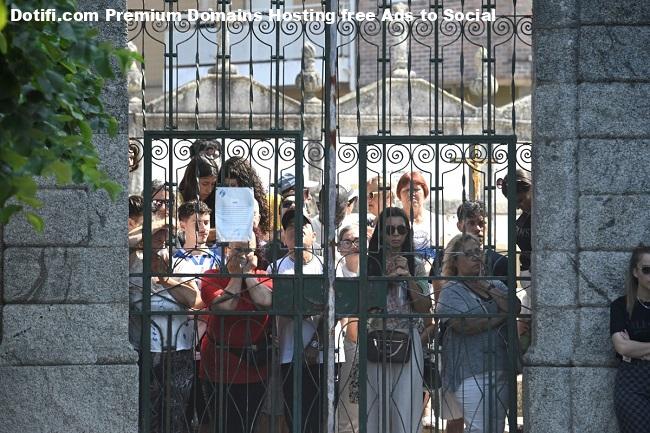
 

People stand behind the gate of the cemetery during the funeral ceremony of Liverpool’s Portuguese forward Diogo Jota and his brother Andre Silva in Gondomar, on the outskirts of Porto, on July 5, 2025.  (Photo by MIGUEL RIOPA / AFP)


An attendee holds a portrait of late football player Andre Silva during the funeral ceremony of Liverpool’s Portuguese forward Diogo Jota and his brother Andre Silva at the Mother Church of Gondomar, on the outskirts of Porto, on July 5, 2025.  (Photo by FILIPE AMORIM / AFP)


Diogo Jota’s wife Rute Cardoso (C) follows the coffin of Portuguese football player Diogo Jota carried out of the church after the funeral ceremony of Liverpool’s Portuguese forward Diogo Jota and his brother Andre Silva at the Mother Church of Gondomar, on the outskirts of Porto, on July 5, 2025.  (Photo by MIGUEL RIOPA / AFP)


Among those who came to offer their condolences were a childhood friend, Portuguese President Marcelo Rebelo de Sousa, Prime Minister Luis Montenegro, Jota’s agent Jorge Mendes and Porto club president Andre Villas-Boas.

“Football is truly in mourning. Diogo was an icon of the talent Portuguese football represents,” said football federation chief Pedro Proenca.

Close family and friends including the parents paid their respects at Friday’s wake first, with the grandfather propped up by two others to help him enter the chapel.


 

Former teammates step out of the church after the funeral ceremony of Liverpool’s Portuguese forward Diogo Jota and his brother Andre Silva at the Mother Church of Gondomar, on the outskirts of Porto, on July 5, 2025.  (Photo by FILIPE AMORIM / AFP)


AC Milan’s Portuguese forward Joao Felix (R) leaves after the funeral ceremony of Liverpool’s Portuguese forward Diogo Jota and his brother Andre Silva at the Mother Church of Gondomar, on the outskirts of Porto, on July 5, 2025.  (Photo by FILIPE AMORIM / AFP)


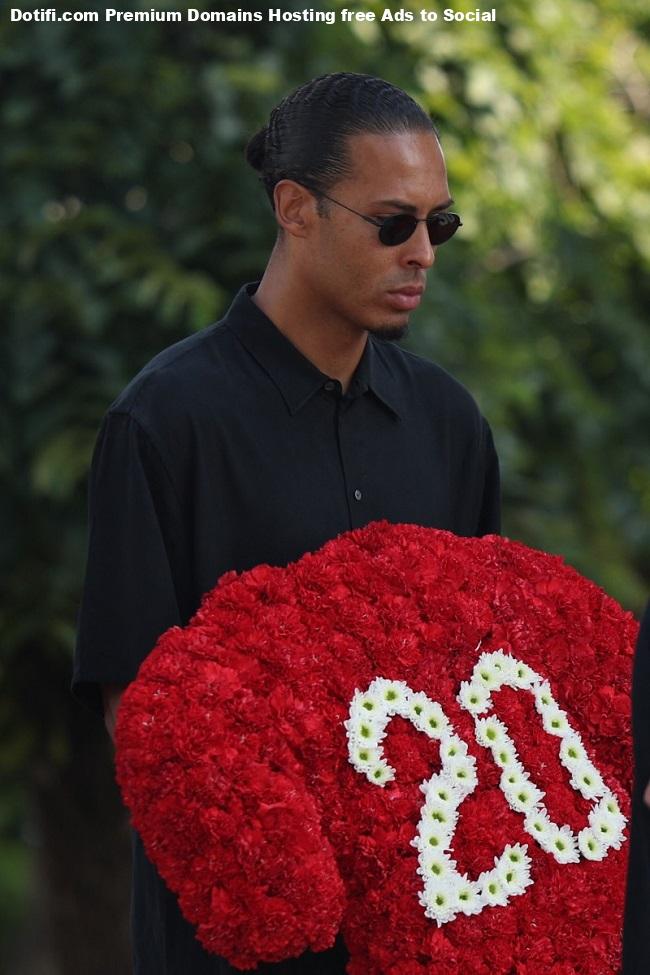
Liverpool’s Dutch defender Virgil van Dijk carries a wreath during the funerals of Liverpool’s Portuguese forward Diogo Jota and his brother Andre Silva at the Mother Church of Gondomar, on the outskirts of Porto, on July 5, 2025.  (Photo by FILIPE AMORIM / AFP)


‘Rest in peace’

Mourners arrived carrying wreaths of flowers, some sobbing audibly, before the wake was opened to members of the public.

The death of the Portugal international and his brother has triggered an outpouring of emotion in football, and beyond.

Liverpool opened a book of condolences and lowered flags to half-mast, with dozens of supporters laying a sea of flowers, balloons, Jota shirts, and scarves with the message “Rest in peace Diogo Jota”, outside Anfield.

At the Diogo Jota football academy, close to Gondomar SC where the ex-Porto and Atletico Madrid player took his first steps in the game, well-wishers created a memorial with flowers, scarves, candles and shirts.

“Thank you, Diogo Jota,” read a child’s handwritten message.
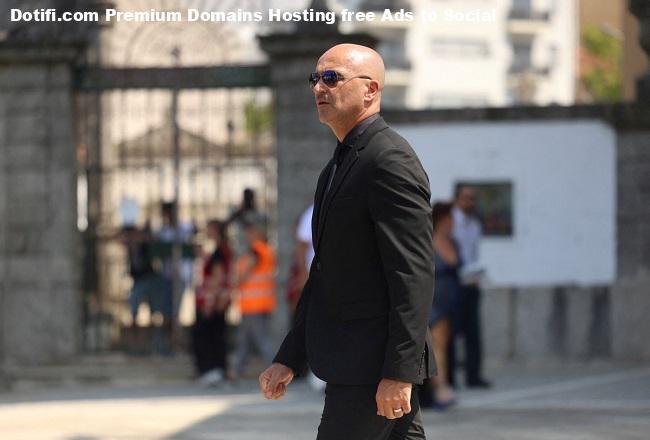
 

Portugal’s national football team coach Spanish Roberto Martinez leaves after the funerals of Liverpool’s Portuguese forward Diogo Jota and his brother Andre Silva at the Mother Church of Gondomar, on the outskirts of Porto, on July 5, 2025.  (Photo by FILIPE AMORIM / AFP)


Wreath in shape of football jerseys are displayed at the entrance of the cemetery after the funeral ceremony of Liverpool’s Portuguese forward Diogo Jota and his brother Andre Silva in Gondomar, on the outskirts of Porto, on July 5, 2025.  (Photo by MIGUEL RIOPA / AFP)


(From L) Portuguese football players Danilo Pereira, Bruno Fendrich and Andre Horta attend the funeral ceremony of Liverpool’s Portuguese forward Diogo Jota and his brother Andre Silva at the Mother Church of Gondomar, on the outskirts of Porto, on July 5, 2025.  (Photo by FILIPE AMORIM / AFP)


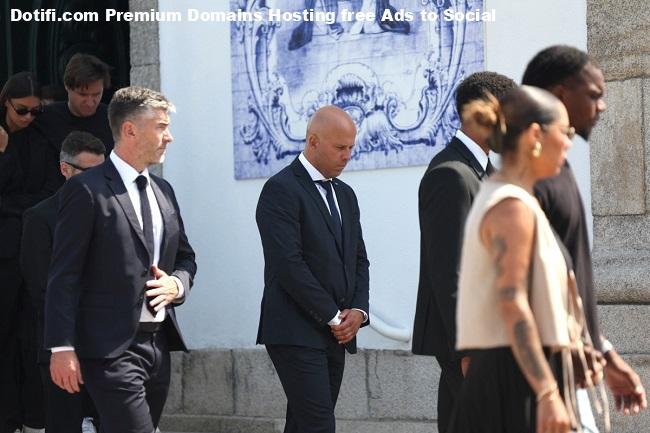
Liverpool’s Dutch manager Arne Slot (C) steps out of the church after the funeral ceremony of Liverpool’s Portuguese forward Diogo Jota and his brother Andre Silva at the Mother Church of Gondomar, on the outskirts of Porto, on July 5, 2025.  (Photo by FILIPE AMORIM / AFP)


Pedro Neves, who was friends with Jota at school in Gondomar, said he “will remember him as someone who was very friendly, very courteous, who loved everyone, who always had a smile on his face”.

“He left us too young, it’s not fair. But that’s how life is sometimes,” Neves, 31, told AFP.

Former Liverpool manager Jurgen Klopp, who brought Jota to the Reds in 2020, has said he was “heartbroken” while the club spoke of an “unimaginable loss”.

Klopp’s successor at Anfield, Arne Slot, said everyone associated with the club owed it to Jota to “stand together and be there for one another”.


Jota was remembered at the Club World Cup in the United States on Friday, with a one-minute silence held at the quarter-final between Brazil’s Fluminense and Saudi Arabia’s Al Hilal in Orlando.

Portuguese and UK media reported Jota was driving to the northern Spanish port of Santander to take a ferry to England where Liverpool were due to start training on Friday, avoiding a flight on medical advice after a recent lung operation.


Liverpool’s Egyptian striker Mohamed Salah said the death of his teammate had left him “frightened” to return to the club as the Premier League champions postponed the return of some players for pre-season training.

Jota had married his partner Rute Cardoso on June 22, posting a video of their wedding on Instagram just hours before the accident. They had three children.


The post Family And Football Unite To Bid Diogo Jota Farewell appearedFrom The Feed @ SEARCHNG.NG THe Nigerian Search Engine.

By john

You missed

From Tramadol to Canadian to Exol-5 The New Drug Destroying Nigerian Youths An Investigative Article .From Tramadol to Canadian to Exol-5: The New Drug Destroying Nigerian Youths An Investigative Report on the Shifting Landscape of Substance Abuse in Nigeria Nigeria faces a severe and evolving drug crisis, particularly among its youth. What began with the widespread abuse of Tramadol has progressed through mixtures like “Canadian” to newer pharmaceutical diversions such as Exol-5. This shift reflects deeper issues: easy access to prescription drugs, weak regulation, socioeconomic pressures, and aggressive street-level marketing. NDLEA operations and health studies reveal a public health emergency that threatens an entire generation. Phase 1: The Tramadol Epidemic (2010s–Early 2020s) Tramadol, a synthetic opioid prescribed for moderate to severe pain, became Nigeria’s most notorious street drug. Cheap, potent, and widely smuggled (often from India and other Asian countries), it offered users energy, euphoria, and pain relief — appealing to commercial drivers, laborers, students, and young men seeking confidence or stamina. Scale of the Problem: Millions of tablets seized annually by NDLEA. High prevalence among young males aged 15–35. Linked to increased crime, sexual violence, organ damage (kidney failure, seizures), and mental health breakdowns. Contributed to broader opioid misuse alongside codeine cough syrups. Government responses included tighter import controls and public awareness campaigns, but these only displaced demand to other substances rather than eliminating it. Phase 2: The Rise of “Canadian” (Mid-2020s) “Canadian” or “Canadian Loud” emerged as a popular code for high-grade cannabis (often indica-dominant strains) or cannabis mixed with other synthetics. It gained traction as users sought alternatives or combinations to Tramadol’s effects. This phase marked a move toward imported or locally cultivated premium weed, sometimes laced with stronger chemicals. Youths in urban centers like Lagos, Kano, Jos, and Onitsha embraced it for its perceived “cleaner” high compared to opioids. However, it fueled polydrug use — combining cannabis with opioids, sedatives, or alcohol — amplifying health risks. Phase 3: Exol-5 – The Current Threat (2024–2026) Exol-5 (Benzhexol Hydrochloride / Trihexyphenidyl 5mg), originally a prescription medication for Parkinson’s disease and drug-induced movement disorders, has become the latest pharmaceutical being heavily abused. Why Exol-5? Euphoric Effects: Users report intense euphoria, hallucinations, and a sense of detachment — making it attractive as a cheap “upper” or escape. Accessibility: Sold over-the-counter or on the black market despite being a controlled prescription drug. NDLEA has seized millions of pills in single operations (e.g., 3.1 million pills in Kano in late 2024, and over 5.6 million combined with Tramadol in other busts). Street Names: Exol, Artane, Benzhexol, “Farin Mallam” (in Northern Nigeria). Demographics: Prevalent among youths, laborers, and even psychiatric patients who divert prescriptions. Studies show abuse rates as high as 25% among certain outpatient groups. Health Consequences: Anticholinergic toxicity: Confusion, dry mouth, blurred vision, urinary retention, constipation, and in high doses — delirium, psychosis, seizures, and heart issues. Long-term: Cognitive impairment, addiction, exacerbated mental health disorders. Often mixed with Tramadol, codeine, or cannabis, creating dangerous synergies. In cities like Jos, Exol-5 sits alongside diazepam, Rohypnol, and Tramadol on street markets, easily available to teenagers and young adults. Why This Evolution Continues Supply-Side Failures: Porous borders, corrupt officials, and overproduction of pharmaceuticals enable diversion. Demand Drivers: Unemployment, poverty, peer pressure, trauma, and the pursuit of performance enhancement (e.g., for “hustle” culture). Weak Regulation: Many pharmacies sell restricted drugs without prescriptions. Online and street vendors fill gaps. Displacement Effect: Cracking down on one substance (Tramadol/codeine) pushes users and dealers toward the next available option. NDLEA reports ongoing large seizures, but the problem persists due to high profitability and low risk for mid-level distributors. Broader Impacts on Nigerian Youths Education: Increased dropout rates and poor academic performance. Mental Health: Rising cases of psychosis and depression. Economy: Lost productivity among the working-age population. Crime and Violence: Drug-fueled robberies, cultism, and family breakdowns. Public Health System Strain: Overburdened hospitals treating overdoses and chronic complications. Young people aged 15–39 remain the hardest hit, with national surveys showing drug use prevalence significantly above global averages. What Must Be Done Stronger Enforcement: Consistent prosecution of corrupt enablers and large-scale traffickers. Regulation: Crackdown on rogue pharmacies and better tracking of prescription drugs. Prevention & Rehabilitation: School programs, community outreach, and expanded treatment centers (currently woefully inadequate). Economic Alternatives: Address root causes like youth unemployment. Public Awareness: Honest campaigns highlighting real dangers of “Exol-5” and similar drugs. Conclusion From Tramadol’s opioid grip to “Canadian” cannabis culture and now Exol-5’s anticholinergic highs, Nigeria’s drug crisis is mutating faster than responses can contain it. Exol-5 represents the dangerous new frontier — a legitimate medicine turned youth destroyer due to misuse and greed. Without urgent, multi-layered intervention — combining supply disruption, demand reduction, and socioeconomic support — an entire generation risks being lost to addiction. The time for half-measures is over. Nigeria’s future depends on winning this fight.