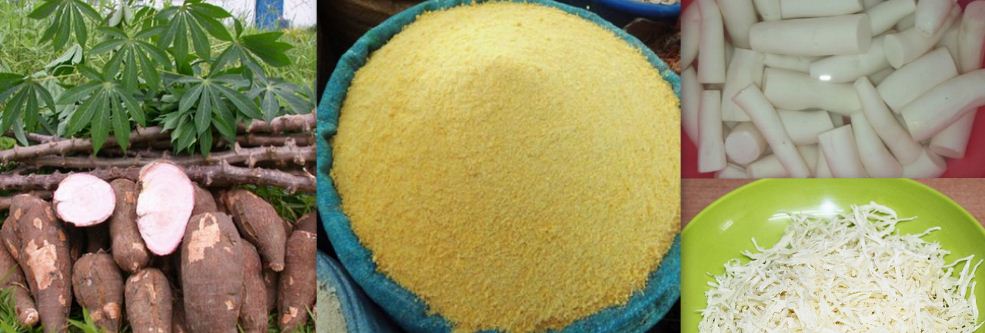
Garri adds a lot of health benefits to human health which is not just limited to giving energy to the body. There aresome other important nutrition it contains that surprisingly adds benefits to health and lifestyle which many people may never have come across.
Garri has many nutritional contents. The minerals and vitamins contained in garri and other cassava derivatives like flour, abacha etc., are not limited to iron, manganese, calcium, sodium, magnesium, thiamin, copper, ascorbic acid, zinc, vitamin A and potassium. It also contains dietary fibre, protein, lipids, and more.
In this writing, we have compiled some of these health benefits which are listed below;
The Health Benefits of Garri:
- Aids in Digestion
Garri is rich in high fibre content which helps in the digestive health. Garri can be soaked in cold water with milk to make it creamy, and when consumed the fibre content in it helps to make one fuller, helps in quick digestion and sustains one from hunger for some time, and also eliminates the chances of constipation.
- Fibre content in garri helps in weight loss as it reduces appetite and as well reduces the chances of other health conditions such as heart and other cardiovascular diseases, cancer and diabetes.
But in as much as the fibre is good for the digestive system, taking too much of it can cause stomach cramps or bloat.
- Cassava contains starch which is known as resistant starch because it doesn’t get absorbed fully in the digestive system, it is beneficial to the body because it helps in removing some of the particles of cholesterol present in the system after it gets attached to them thereby acting like a soluble fibre.
Because of this, eating of garri helps in the reduction of glucose in the blood.
- Improves Immune System
The contents of most of the minerals and vitamins in garri might be low but it is also a good source for other minerals it contains such as copper and magnesium which help in keeping the immune system healthy.
These minerals also play a vital role as it contributes to the maintenance of healthy bones, nerves and the immune systems.
Some people may not know that while consuming food that has good amount of copper that they are maintaining healthy and functioning nervous system and on the other hand lower the risk of getting osteoporosis.
- 3. Promote Eye health
Garri also contains the compound known as bakarotennya, this compound helps to prevent blindness. The presence of an important vitamin (vitamin A) in garri helps in the prevention of poor sight as well, as far as it is consumed in moderation.
Most importantly the garri has to be processed well to avoid eye problems which are caused by the cynanide present in not-to-well processed garri especially and when consumed in large quantity and can also irritate the intestinal bowels leading to or worsen the case of ulcer because of its acidic nature.
- 4. Energizes& Cools The Body
It has been noted from researches that Garri has 360 calories of which 99% is Carbohydrate. It is actually the number of calories in food that measures the unit of energy contained in that food.
Soaked garri known as “garium sulphate” in English provides a certain amount of energy as mentioned above which the human body needs to maintain daily health and life. It also provides a good cooling effect to the body in hot weather when soaked in cold water with milk.
The nutrients in it and the combination of milk in cold water makes it creamy and chill the whole body after consumption. Garri in this form energizes the body quickly and makes the system to relax in a calm way.
- Prevents Cancer
This might have never been heard of by many people and therefore it may seem too difficult to believe, but this is just a fact you have to note down from reading this article.
Experiments have shown that the presence of B17 vitamin (Amygdalin) and fibre in garri help to stimulate the red blood cell and prevent the stomach from cancerous diseases.
- 6. Reduce Age-Related Illness
Studies have shown that one cup of garri contains up to 15% of folate that the body requires in a day as well as 47% of the body’s calcium requirement.
Folate has an integral role to play in pregnant women in the aspect of foetal development and helps reduce the risk of age-related macular degeneration. That is helping to minimize age-related illnesses that progress faster in the human body and may cause the loss of sight.
- It’s Gluten-Free
Garri is a gluten-free food because it does not contain the combination of proteins found in wheat and related other grain foods.
Therefore, garri can be eaten by people with celiac disease (affects the intestine) or those who are sensitive to gluten. Foods that contain gluten irritate their guts and in most cases damage their small intestine.
Nutritional values of Garri (cassava flakes)
| Fibres | 48 g |
| Protein | 1.1 g |
| Fat | 1g |
| Kilocalories | 330 |
| Carbohydrate | 80 g |
| Calcium | 40 mg |
| Iron | 1.5 mg |
| Cholesterol | 0 mg |
| Sodium (Na) | 0 mg |
Know more about Garri:
Garri is one of the popular foods which predominately originated from the processing of Cassava which is one of the main sources of carbohydrate and a staple food too as it is widely grown and has a lot of its derivatives which serve a larger purpose in both industrial food processing and commercial use.
Just as garri (cassava flakes) can be gotten from cassava, there are also other food products which can be processed from it such as Fufu (Akpu or Santana), it can as well be processed into Bobozee (commonly known as Abacha Mmiri) and chips for snacks.
Soaking garri is a very nice way of making instant cereal which most Nigerian do today. I have heard people say that “soaking garri used to blind eyes” soaking garri can be nutritious as it is a veritable source of energy and there has never been a proof that someone got blind by drinking of soaked garri.
Side Effects
- Even though cassava and its derivatives like garri can cause more harm than good especially when taken too much, it is also good to know that its nutritional values are of benefit to the body as well when taken in moderate conditions.
- Garri which is gotten from cassava contains cyanide which can lead to mild or harmful eye problem when consumed in excess and can also irritate the intestinal bowels leading to or worsen the case of ulcer because of its acidic.
- Carbohydrate is the chief nutrient in cassava and its derivatives, it is also the main source of energy which is converted into glucose and then glycogen in the body, but the intake of too many carbohydrates is much likely going to lead to weight gain and might trigger health conditions related to obesity.
- The contents of most of the minerals and vitamins in cassava might be low but it is also a good source for other minerals it contains such as potassium and vitamin A. Minerals and vitamins are good for the body as it aids the body tissues to develop and function well.
Conclusion:
Garri offers many health benefits such as helping in food digestion, improving the immune system, promoting eyesight, energizing and helping to cool to the body especially when soaked in water, cancer prevention and reducingage-related illness.
The major advantages of eating garri include that is loads the body with lots of fibre and starch which adds to the dose of protein and vitamin contents.
It is a very important food crop as it serves various food purposes, it has nutritional values which are great for body and the general health especially when it is processed well, though it is believed that too much processing of cassava especially when it comes to garri can reduce some of the nutrients it has or can be lost entirely in the processes of frying.
Cassava: Benefits and Dangers
Cassava is a root vegetable widely consumed in developing countries. It provides some important nutrients and resistant starch, which may have health benefits.
On the other hand, cassava can have dangerous effects, especially if it is eaten raw and in large amounts.
This article will explore the unique properties of cassava to determine if it’s a healthy and safe food for you to include in your diet.
Cassava is a nutty-flavored, starchy root vegetable or tuber. Native to South America, it’s a major source of calories and carbs for people in developing countries.
It is grown in tropical regions of the world because of its ability to withstand difficult growing conditions — in fact, it’s one of the most drought-tolerant crops (1Trusted Source).
In the United States, cassava is often called yuca and may also be referred to as manioc or Brazilian arrowroot.
The most commonly consumed part of cassava is the root, which is very versatile. It can be eaten whole, grated or ground into flour to make bread and crackers.
Additionally, cassava root is well known as the raw material that’s used to produce tapioca and garri, a product similar to tapioca.
Individuals with food allergies often benefit from using cassava root in cooking and baking because it is gluten-free, grain-free and nut-free.
One important note is that cassava root must be cooked before it is eaten. Raw cassava can be poisonous, which will be discussed in a later chapter.
SUMMARY:Cassava is a versatile root vegetable that is consumed in several parts of the world. It must be cooked before it is eaten.
A 3.5-ounce (100-gram) serving of boiled cassava root contains 112 calories. 98% of these are from carbs and the rest are from a small amount of protein and fat.
This serving also provides fiber, as well as a few vitamins and minerals (2).
The following nutrients are found in 3.5 ounces (100 grams) of boiled cassava (2):
- Calories: 112
- Carbs: 27 grams
- Fiber: 1 gram
- Thiamine: 20% of the RDI
- Phosphorus: 5% of the RDI
- Calcium: 2% of the RDI
- Riboflavin: 2% of the RDI
Boiled cassava root also contains small amounts of iron, vitamin C and niacin (2).
Overall, the nutrition profile of cassava is unremarkable. While it does provide some vitamins and minerals, the amounts are minimal.
There are many other root vegetables you can eat that will provide significantly more nutrients — beets and sweet potatoes, to name two.
SUMMARY:Cassava is a significant source of carbs and also provides a small amount of fiber, vitamins and minerals.
Processing cassava by peeling, chopping and cooking it significantly reduces the nutritional value (2).
This is because many of the vitamins and minerals are destroyed by processing, as well as most of the fiber and resistant starch (2).
Therefore, the more popular, processed forms of cassava — such as tapioca and garri — have very limited nutritional value.
For example, 1 ounce (28 grams) of tapioca pearls provides nothing but calories and a small amount of a few minerals (3).
Boiling cassava root is one cooking method that has been shown to retain most nutrients, with the exception of vitamin C, which is sensitive to heat and easily leaches into water (2).
SUMMARY:While cassava contains several nutrients, processing methods significantly lower its nutritional value by destroying vitamins and minerals.
Cassava contains 112 calories per 3.5-ounce (100-gram) serving, which is quite high compared to other root vegetables (2).
For example, the same serving of sweet potatoes provides 76 calories, and the same amount of beets provides only 44 (4, 5).
This is what makes cassava such an important crop for developing countries, since it is a significant source of calories (2).
However, its high calorie count may do more harm than good for the general population.
Consuming high-calorie foods on a regular basis is associated with weight gain and obesity, so consume cassava in moderation and in reasonable portions (6Trusted Source, 7Trusted Source). An appropriate serving size is about 1/3–1/2 cup (73–113 grams).
SUMMARY:Cassava contains a significant number of calories, so consume it in moderation and in appropriate portion sizes.
Cassava is high in resistant starch, a type of starch that bypasses digestion and has properties similar to soluble fiber.
Consuming foods that are high in resistant starch may have several benefits for overall health (8Trusted Source).
First of all, resistant starch feeds the beneficial bacteria in your gut, which may help reduce inflammation and promote digestive health (8Trusted Source, 9Trusted Source).
Resistant starch has also been studied for its ability to contribute to better metabolic health and reduce the risk of obesity and type 2 diabetes.
This is due to its potential to improve blood sugar control, in addition to its role in promoting fullness and reducing appetite (10Trusted Source, 11Trusted Source, 12Trusted Source, 13Trusted Source).
The benefits of resistant starch are promising, but it is important to note that many processing methods may lower cassava’s resistant starch content (14, 15).
Products made from cassava, such as flour, tend to be lower in resistant starch than cassava root that has been cooked and then cooled in its whole form (14, 15).
SUMMARY:Cassava in its whole form is high in resistant starch, which is known for its role in preventing certain metabolic conditions and promoting gut health.
One of cassava’s major downfalls is its content of antinutrients.
Antinutrients are plant compounds that may interfere with digestion and inhibit the absorption of vitamins and minerals in the body.
These aren’t a concern for most healthy people, but their effects are important to keep in mind.
They are more likely to impact populations at risk of malnutrition. Interestingly, this includes populations that rely on cassava as a staple food.
Here are the most important antinutrients found in cassava:
- Saponins: Antioxidants that may have drawbacks, such as reduced absorption of some vitamins and minerals (16Trusted Source).
- Phytate: This antinutrient may interfere with the absorption of magnesium, calcium, iron and zinc (2, 17Trusted Source).
- Tannins: Known for reducing protein’s digestibility and interfering with the absorption of iron, zinc, copper and thiamine (2).
The effects of antinutrients are more prominent when they are consumed frequently and as part of a nutritionally inadequate diet.
As long as you only consume cassava on occasion, the antinutrients shouldn’t be a major cause for concern.
In fact, under some circumstances, antinutrients such as tannins and saponins may actually have beneficial health effects (18, 19Trusted Source, 20Trusted Source).
SUMMARY:The antinutrients in cassava may interfere with the absorption of some vitamins and minerals and may cause digestive distress. This is mainly a concern for populations that rely on cassava as a staple food.
Cassava may be dangerous if consumed raw, in large amounts or when it is prepared improperly.
This is because raw cassava contains chemicals called cyanogenic glycosides, which can release cyanide in the body when consumed (21Trusted Source).
When eaten frequently, these increase the risk of cyanide poisoning, which may impair thyroid and nerve function. It is associated with paralysis and organ damage, and can be fatal (21Trusted Source, 22Trusted Source).
Those who have an overall poor nutrition status and low protein intake are more likely to experience these effects, since protein helps rid the body of cyanide (21Trusted Source).
This is why cyanide poisoning from cassava is a greater concern for those who live in developing countries. Many people in these countries suffer from protein deficiencies and depend on cassava as a major source of calories (21Trusted Source).
What’s more, in some areas of the world, cassava has been shown to absorb harmful chemicals from the soil, such as arsenic and cadmium. This may increase the risk of cancer in those who depend on cassava as a staple food (23Trusted Source).
SUMMARY:Frequent consumption of cassava is associated with cyanide poisoning, especially if it is consumed raw and prepared improperly.
Cassava is generally safe when it is prepared properly and eaten occasionally in moderate amounts. A reasonable serving size is about 1/3–1/2 cup.
Here are some ways you can make cassava safer for consumption (21Trusted Source, 24Trusted Source):
- Peel it: The peel of cassava root contains most of the cyanide-producing compounds.
- Soak it: Soaking cassava by submerging it in water for 48–60 hours before it is cooked and eaten may reduce the amount of harmful chemicals it contains.
- Cook it: Since the harmful chemicals are found in raw cassava, it’s essential to cook it thoroughly — by boiling, roasting or baking, for example.
- Pair it with protein: Eating some protein along with cassava may be beneficial, since protein helps rid the body of toxic cyanide (21Trusted Source).
- Maintain a balanced diet: You can prevent adverse effects from cassava by including a variety of foods in your diet and not relying on it as your sole source of nutrition.
It’s important to note that products made from cassava root, such as cassava flour and tapioca, contain extremely little to no cyanide-inducing compounds and are safe for human consumption.
SUMMARY:You can make cassava safer for consumption with several strategies, including using certain preparation methods and consuming it in reasonable portions.
There are many ways you can incorporate cassava into your diet.
You can prepare several snacks and dishes with the root on its own. It is commonly sliced and then baked or roasted, similar to the way you would prepare a potato.
Additionally, cassava root can be mashed or mixed in with stir-fries, omelets and soups. It’s also sometimes ground into flour and used in bread and crackers.
You can also enjoy it in the form of tapioca, which is a starch extracted from the cassava root through a process of washing and pulping.
Tapioca is commonly used as a thickener for puddings, pies and soups.
SUMMARY:Cassava is typically used in the same way that you would use potatoes and makes an excellent addition to just about any dish. It can also be ground into flour or enjoyed in the form of tapioca.
Cassava contains some healthful properties, but its negative effects appear to outweigh the benefits.
Not only is it high in calories and antinutrients — it can cause cyanide poisoning when prepared improperly or consumed in large amounts.
While this is mostly a concern for those who rely on cassava as a staple food, it is still important to keep in mind.
Additionally, cassava-based products like tapioca and garri have been processed enough to remove the toxic chemicals and are not dangerous to consume.
Overall, cassava is not a food that needs to be a regular part of your diet. If you do eat it, prepare it properly and eat it in reasonable portions.