
•Stakeholders say coalition has few weeks to decide or hand victory to Tinubu
By Omoniyi Salaudeen
As the general election approaches, Nigeria’s anti-incumbent bloc faces an agonising choice between personal ambition, regional balancing, and collective political survival. On Tuesday, opposition coalition attempted another comeback, but its path to 2027 remains highly volatile and uncertain. Driven by an urgent desire to challenge the All Progressives Congress’s (APC) hold on power, leading political figures have repeatedly tried, and failed, to form a single, formidable electoral bloc capable of staging a winning campaign. The cycle is exhausting for political observers and citizens alike: brief, carefully orchestrated displays of public solidarity quickly yield to intense internal infighting. Caught in a delicate balance between collective political survival and unyielding individual ambition, every fresh attempt to bridge the divide seems to only deepen the ensuing crisis of confidence among the political class and the electorate.
Barely months away from the polls, the coalition finds itself right back at the drawing board. The urgency is real: the Independent National Electoral Commission (INEC) has officially lifted the ban on political campaign activities, and presidential hopefuls have already established their individual campaign machinery across the six geopolitical zones. For millions of Nigerians frustrated by mounting economic hardship, soaring food prices, escalating fuel costs, and widespread insecurity, a unified coalition represents the most viable alternative to the ruling party. Yet, if the opposition fails to resolve its internal contradictions and enters the upcoming race fragmented, it will inevitably repeat its painful 2023 missteps.
Elusive search for unity
The push for a united opposition front is not new; it began almost immediately after post-election litigation concluded in late 2023. The first major bid came in May 2026, when Peoples Democratic Party (PDP) governors, Labour Party (LP) chieftains, and African Democratic Congress (ADC) leaders met in Abuja under the banner of the National Salvation Front. Their communiqué unveiled an ambitious 10-point agreement to forge a single presidential ticket and present a unified economic blueprint to the electorate. Within two weeks, the deal unravelled over a familiar sticking point: who gets the presidential ticket. The PDP insisted the ticket must return to the North to balance regional power dynamics, while LP leaders argued their impressive 2023 electoral performance and passionate youth base earned them the top spot on the ballot. By June, joint statements ceased entirely amid mutual accusations of secret talks with the ruling APC.
In July 2026, the ADC made a bold move by opening its platform for a full merger, inviting aggrieved PDP and LP members to integrate into its structures. Several governors, senators, and prominent political heavyweights attended the grand unveiling in Lagos, offering a brief 72-hour glimpse of a potential political breakthrough. However, the battle over party structure quickly erupted, focusing on control of the National Executive Committee and state-level candidate selections. PDP stakeholders walked out in protest, accusing the ADC of attempting to absorb them rather than execute a genuine, equal merger. Meanwhile, the LP fractured further—one faction backed the ADC alignment, while another vowed to rebuild independently from within. The merger agreement was never signed.
With time running out, coalition leaders established a 15-man Technical Committee in early August to harmonise manifestos and zoning formulas. Designed to buy valuable time and project unity to an increasingly sceptical public, the committee instead exposed deeper internal fractures. Two members granted separate media interviews in the same week directly contradicting each other on zoning rules, while another was accused of accepting consultancy fees from a prominent 2027 presidential aspirant. By late August, the committee had failed to convene, prompting a senior member to privately concede that they were simply managing egos rather than building a functional political movement.
Why alliances collapse
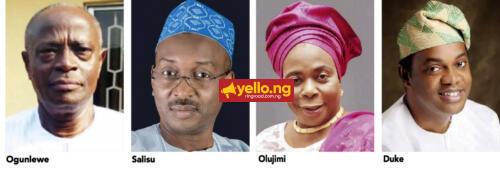
These alliances collapse repeatedly because the political incentives driving party leaders directly oppose the compromises required for a stable mega-coalition. At the core of the friction is the structural nature of executive power in Nigeria, where the presidency concentrates immense resources, appointments, and financial patronage. Former Governor of Cross River State and presidential candidate of the PRP, Donald Duke, underscored the asymmetric advantage of the ruling party, noting: “Everything is skewed in favour of the incumbent. The only way you can seriously charge, tackle the incumbent is to come together to tackle him, otherwise we will factionalise. We need to come together if we really want to take him out. Bola Tinubu is not the average politician. He is not the run-of-the-mill politician.”
Reconciling North-South rotation principles adds another layer of complexity, as Southern demands for regional equity directly clash with Northern claims based on numerical voter strength and demographic advantage. Furthermore, Nigerian political parties function primarily as electoral vehicles rather than ideological movements, meaning alliances lack structural glue and easily fracture over patronage or ticket allocations. Sometimes, opposition often accuse the ruling APC of exploiting these dynamics using state machinery, legal challenges, patronage, and targeted litigation to widen existing fault lines within their ranks.
Joining the discourse from the ruling party’s perspective, former Minister of Works, Senator Adeseye Ogunlewe, in a brief remark in a telephone chat with Sunday Sun, unequivocally declared that the APC will win:
“I am an APC; how do you think I will wish our opposition well? No matter what they do, APC will ultimately win this election.”
Unlike the historic 2013 merger that created the APC through complete structural dissolution of its founding parties, contemporary efforts rely on loose memorandums of understanding that leave individual leaders with easy exit routes back to their original platforms whenever negotiations turn sour.
Analysing the structural flaw on a television programme, public affairs analyst, Muyiwa Akintunde, observed that the coalition is essentially doing the right thing at the wrong time: “The promoters of this coalition have not done the right thing. They thought it the right thing, but not at the right time. In the sense that if we go back in time, recent time even, the coalition that brought in APC in 2015 was formed well about three years before the election. Actually it was formed in February 2013. We have an opposition now that doesn’t have more than two states. And they have just a couple of months to the election.”
Akintunde added that conflicting personal ambitions heavily compound this timing deficit: “What is going to be a major problem for them is who is going to be the presidential candidate of this coalition because all of them have ambition. Atiku has his ambition, Peter Obi has his ambition, even the one that might not likely make it to the last three, all of them, each of them have ambition. They have to bear, but the time is very short for them.”
History of broken alliances
This impasse is not an anomaly, but the continuation of a decades-long historical pattern in Nigerian party politics. As far back as 1983, the Progressive Parties Alliance collapsed because neither Obafemi Awolowo nor Nnamdi Azikiwe would step aside for the other, allowing the National Party of Nigeria (NPN) to retain power effortlessly. Decades later, during the lead-up to the 2011 general elections, merger talks between Bola Tinubu’s Action Congress of Nigeria (ACN) and Muhammadu Buhari’s Congress for Progressive Change (CPC) broke down over power-sharing ratios, cabinet allocations, and running-mate slots, splitting the anti-incumbent vote and handing the PDP an easy victory.
By 2019, the PDP led over 30 parties under the Coalition of United Political Parties (CUPP) umbrella, but key members refused to dissolve their regional structures or step down for unified legislative candidates, rendering the alliance ineffective against the incumbent APC election machine. Most recently in 2023, high-stakes third-force talks between Peter Obi of the Labour Party and Rabiu Kwankwaso of the New Nigeria Peoples Party (NNPP) stalled over who would take the vice-presidential slot. The resulting three-way opposition split fragmented millions of votes and handed the APC victory on a minority share of the total vote cast.
The structural trap facing 2027
The latest summit convened by the G-100—bringing together parties like the ADC, Social Democratic Party (SDP), Peoples Redemption Party (PRP), Allied Peoples Movement (APM), and PDP—reflects this on-going tension between personal ambition and collective survival. To avoid past traps where negotiations dragged on endlessly, the summit set a strict four-week target to establish a legally binding framework. The strategy hinges on specialised working groups focusing on key initiatives, including a single-term transition charter proposing a four-year Government of National Competence designed explicitly to reduce friction over long-term power retention among member parties.
However, critics remain profoundly sceptical about the enforceability of such arrangements. Secretary of the Ijaw Elders Forum, Efiye Bribena, highlighted the legal reality behind this strategy: “The idea of a single tenure is not enforceable. It can only be a gentleman’s agreement. And it will depend on the integrity of the individual involved. You cannot enforce it because it is a constitutional right. You cannot stop the person from contesting. There is no legal obligation.”
Reinforcing this initiative, the Taminu Turaki-led faction of the PDP indicated its interest to adopt the opposition’s proposal to field a single presidential candidate. Turaki noted that the group believes a transparent process of opposition collaboration could produce a credible leadership for Nigerians, adding that the initiative was consistent with the faction’s earlier position of building working relationships with like-minded political parties and organisations.
In a statement issued on Tuesday by its National Publicity Secretary, Ini Ememobong, the faction emphasised that presenting a single candidate against President Bola Tinubu of the All Progressives Congress (APC) is necessary to defeat the ruling party in the forthcoming election. The decision, as detailed in the statement, was informed by “the wailings of Nigerians groaning under the repressive Bola Tinubu APC-led federal government, and the compelling need to join forces with other credible political forces in search of the country’s redemption.”
Turaki elaborated on the conditions: “Our participation is anchored on the promise that the process will be hinged on the philosophical underpinnings of transparency, equality, data-driven decisions and egalitarianism. Any result birthed by a process midwifed by these virtues will certainly offer Nigerians a credible leadership capable of alleviating the skyrocketing poverty and rising insecurity in the country.”
Conversely, former Senate Minority Leader, Senator Abiodun Olujimi, who represented Ekiti South Senatorial District in the 8th National Assembly on the platform of the PDP, dismissed outright as an effort in futility the proposal to field a single presidential candidate. She said in a telephone conversation with Sunday Sun: “It cannot work. It cannot work because those of us in the opposition have tried it before, and it has never succeeded. It fails because each candidate firmly believes they have the individual capacity to win. They assume they can simply take their past voting numbers, add a little extra, and secure a victory. But reality does not work that way; it is an illusion, as those numbers are simply not there for anyone to claim. In the end, they will only wind up in disarray.
“Weaponising poverty is not what the people want to hear at this time. What they want is an alternative policy that genuinely improves their lives—something the opposition lacks.
“The absence of Atiku Abubakar and Peter Obi is even a big minus to the coalition summit. At least, their presence would have given it some level of assurance and credibility.
“The promise to restore the fuel subsidy may sound appealing to those hoping to benefit from it, but it represents a policy somersault that would drag us back to where we started. Having served in government, we all know the toll that system took on the country.
“Some of us in the opposition aligned with President Tinubu because he is always ready to make course corrections whenever necessary—a true hallmark of good leadership. The hardship associated with current policies may stem from factors overlooked during their initial design, but he remains willing to adjust. Making thoughtful adjustments is far better than executing a complete policy somersault. A policy somersault will lead us nowhere.”
However, the ultimate success of this ambitious initiative rests on key political heavyweights who command vast followings. Atiku Abubakar controls established party machinery across the North along with significant campaign financing, making his willingness—or unwillingness—to step into a supporting or advisory role a decisive factor for any Southern-led ticket. Conversely, Peter Obi commands the formidable “Obidient” movement and holds a massive, highly energised base in parts of the country, leading his supporters to insist that his voter engagement makes him the non-negotiable anchor for the top spot.
Efiye Bribena expressed optimism that the coalition is workable if the parties involved address these dynamics with sincerity of purpose: “The coalition is workable. But it depends on how they want it. If you recall the last time I spoke with you, I said there was a possibility of the coalition presenting a single candidate. So, I am not surprised that the summit has come up with the proposal. How it is going to happen, I don’t know.
“Even though Atiku and Obi were not present at the summit, I think both of them are weighing their options.
“Everybody is tired of the Bola Tinubu government. If there is a free and fair election, Obi will likely win. He will floor both Tinubu and Atiku. But the fact is that it is not a free and fair election that determines who becomes president. If the coalition is going to pick the best candidate, they will pick Obi. But if they are looking at their political interests, which is typical of politicians, they will not pick Obi.
“I believe the coalition will end up producing one candidate if it is Obi. But if it is not Obi, they will end up presenting two candidates.
“If both Atiku and Obi decide to put their interests aside and look at the national interest, it can work. And one of the ways it can work is to have a compromise candidate instead of either of them.
“I don’t foresee any of them stepping down for the other. It is not likely that Atiku will step down. Obi is also not likely to say, ‘I’m no longer contesting.’ But they may likely rally their supporters to work for one of them.
“If both of them decide to go for a compromise candidate, I will bet on Adebayo because Adebayo is sound. He’s the only person I would put next to Obi.
“If both of them realise that the best option is to throw their weight behind somebody else as a compromise, I would place my bet on Adebayo.”
Meanwhile, middle-tier figures like Duke and Adewole Adebayo bring technocratic credibility, with Duke’s explicit willingness to step aside offering a rare model of subordinating personal ambition for the broader platform.
Raging debate over way forward
The window to build a viable front is closing rapidly, leaving opposition leaders with two practical options to consider before time expires. According to some analysts, the first option is a full merger under a single existing platform, which demands immediate and painful concessions on leadership structures and candidacy rights before election deadlines pass. The second is an electoral alliance where parties retain their distinct party identities but formally commit to a single presidential candidate while strategically coordinating legislative and governorship tickets across states to prevent vote-splitting. What cannot work is repeating the recent cycle of hosting summits, issuing joint communiqués, and returning to isolated corners without a unified strategy.
Inflation, high fuel costs, and widespread economic insecurity have made daily survival the primary central issue for the Nigerian electorate. The opposition possesses the necessary arguments and public frustration required to challenge the ruling party, but it currently lacks a unified vehicle to translate that widespread discontent into victory. Ultimately, 2027 will be decided not just by who is on the ballot, but by who turns out to vote on election day. A united opposition can drive voter enthusiasm and turnout, whereas a fractured one guarantees low participation and an easy path to re-election for the incumbent. The opposition has one final window to convert months of failed negotiations into a genuine, binding alliance. If it misses this opportunity, history will record that it did not lose to the APC, it lost to itself.
The post 2027: Opposition coalition faces single candidate dilemma appeared first on The Sun Nigeria.